Wednesday, 31 December 2014

New Year's Eve - Highlights of 2014 on the Riverside

Looking back at the warmest year on record:


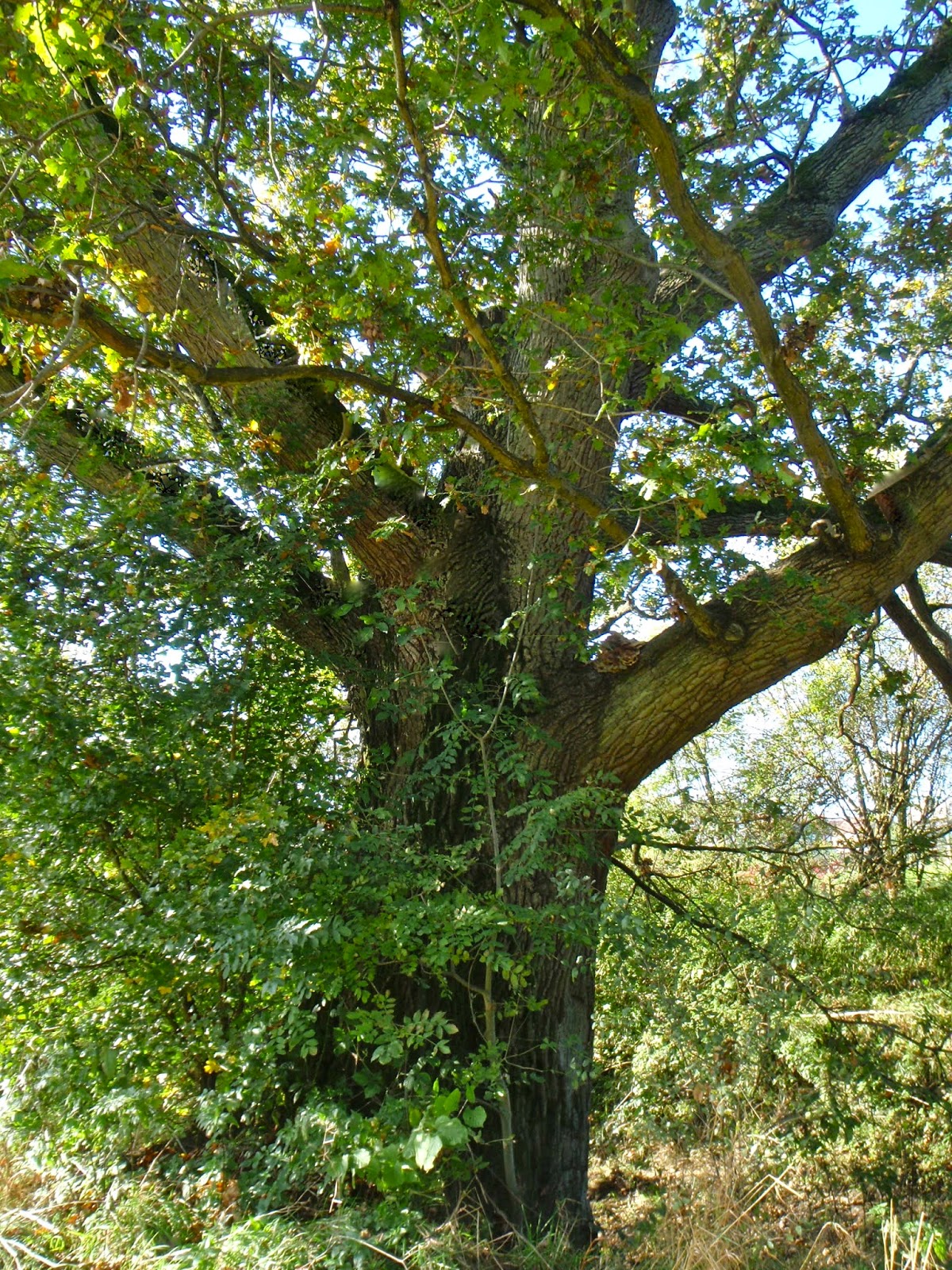
An oak this winter on the riverside (winter 2014-2015)

A summary:
(look back to the detailed reports by clicking on the date and titles in the column at the right)

January 2014
A mild but wild month with storms and gales - but no snow.
Grey wagtails on the river, redwing and fieldfare enjoying the abundance of fruits and berries of the thickets.

February 2014
More storms, large flock of redwing still foraging, linnets 

March 2014
Suddenly it was spring, with early Butterflies: Commas, Small Tortoiseshells, Peacocks and Brimstones.
Bumble bees, Blackthorn blossom and the arrival of chiffchaffs

April 2014
Abundant wild flowers, Orange Tip butterflies, Blackcaps arrive

May 2014
Damselflies (some species very early to emerge), whitethroats and other migrant warblers arrive - and Tree Bumble bees

June 2014
Flowering Rosa canina, summer wildflowers,  perfect conditions for damselflies on the river

July 2014
Dragonflies, summer butterflies - excellent habitat for Skippers in the flourishing wild grasses

 August 2014
The approach of autumn and warblers prepare for their journey to warmer lands

September 2014
Bats along the river and hunting raptors:
hobby, kestrel and common buzzards over the river

October 2014
Fruits, bat boxes, late butterflies, flowering ivy -
and recording the age of the oaks and their place in history

November 2014
The new 'scrape', meadow pipits and goldcrests

December 2014
Winter birdsong


Blackbirds, fieldfare and redwing will be waiting for these Ivy berries
to ripen - a feast along the riverside


Monday, 29 December 2014

Winter Singing

Christmas Day - December 25th 2014
The weather was fine and the noise level low, a good chance to see the Riverside in sunshine before the gloomy weather returns.

Signs of a turn in the year were already evident with Hazel trees leading the advance:


 Hazel catkins, lichen and some leaf buds against a rare blue sky.
Beautiful at all times of the year, the Hazel has populated Britain
since the last Ice Age and is often a companion tree to the Oak and the
Ash, flourishing even in their shade.

The records for December 25th are the first since the contractors work on the river (in place of the EA)
was completed on December 11th/12th. They were fortunate as the river remained low until the very last day when work had finished. This month rainfall has not been excessive and the river level and flow have been normal, unlike last year! (see records for December 2013) but the ground over the whole year has remained damp due to quite frequent showers throughout the year and no extreme heat.
This has affected wildlife, with most birds having a very good breeding season, helped too by favourable conditions for insects, providing plenty of food for adult birds to feed to their young.

The morning was sunny after an early frost, with blue sky and scarcely a breeze.

One might imagine that in winter, most birds would be silent, too busy foraging to sing - but today the riverside was filled with song, and no competition from contractors' vehicles.
The first sound was of house sparrows singing or chattering in the hedges, with some preening in the sun on overhanging branches after bathing in the river (41) in several colonies. In the background, the song of a songthrush could be heard, with robins (17) suddenly appearing out of nowhere with loud outbursts of song, usually close behind my shoulder. Once one robin started singing others nearby joined in, positioning themselves in the sun where the light enhanced their brilliance and made them look larger to their competitors.
An unusual duet took place when a singing robin, perched in the sun on a thicket at the rivers edge was taken aback to see a dunnock fly up from the river, flicking its tail, perch itself on the adjacent branch,  'dun' colouring shining gold in the sun - and start to sing loudly. The robin continued to sing and both birds continued singing together for a considerable time....   
It was very good to hear song thrushes still singing along the riverside. One silent bird was down amongst the river bank undergrowth, feeding and another, also silent, flew very low across the river but the others were singing from low down in branches, clearly visible in the sun now that the trees are really bare (5). their clear songs carrying far along the river course. A large mistle thrush was seen out in the open but remained silent, easily distinguished from the smaller, thinner song thrushes.
Their cousins, the fieldfare were active, with a small group moving around in an ivy covered thicket, foraging for ivy berries, with 3 others seen flying across to join them (7). Trying to remain out of sight,
at least 2 redwing were searching for any remaining berries on the river bank vegetation.
A very large number of blackbirds were seen (43) all along the river banks and foraging in groups on the grass. They are probably a mixture of local residents and migrant visitors, all well aware of lean times ahead if the weather turns the ground to ice. They have finished off the holly berries and any other accessible fruits and berries in the thickets leaving only ground-foraging now. Fortunately there are thick layers of damp fallen leaves which at present can be thrown aside by these strong birds, finding plenty to eat underneath the layers.

Low-flying whirring wrens (8) were easily seen today, remaining vigilant whilst foraging under the banks, uttering alarm calls. In a warm sheltered spot, two wrens were singing loudly together, in short bursts, just to make sure others were aware of them.
The jays seem to have left to forage elsewhere, leaving 2 grey squirrels to continue searching the oaks for anything they can find, in the complete absence of acorns this year. Starlings however are doing well with 66 seen today in various groups, loud whistles and rattling sounds coming from their usual day roost. Whilst the ground remains damp and muddy there is no problem finding food, together with the black-headed gulls (25) and herring gulls (20), feeding on the grass and now, very recently, on the margins of the new 'Scrape' (see previous posting) which they discovered as soon as rainwater collected in it.
Corvids were scarce today, with only 2 magpies and 2 calling Jackdaws seen - and 3 carrion crows, one busy cleaning its beak on an oak branch, leaving one to guess what it had been eating! Woodpigeons (19) were quietly sunning themselves on various branches, watching the world go by, pretending to be asleep.
Goldfinches (14), as usual were gathered together in an ivy thicket, singing continuously with others flying in and out in ones and twos, whilst greenfinches (3) and chaffinches (2) were barely noticable, silently flying across amongst the higher branches.

Always a stunning highlight at this time of the year, when trees are bare - bullfinches. Today 3 males were seen, two at the top of a hawthorn and another male in an oak taking advantage of the sun to warm up. They prefer to keep a low profile, with their quiet calls and secretive ways, usually choosing dense leafy thickets to hide in - but now the leaves are gone their vivid colours lit by the sun give them away, even when perched in the middle of dense thickets.
Around them, large roaming groups of blue tits (74) foraged in their erratic manner, some chasing, some calling, together with a more exclusive family group of long-tailed tits (8), their calls giving them away, easily missed when flying high from tree to tree, field maples and oaks. Amongst the roaming flocks, great tits  (39) were concentrating on foraging in the old oaks and in the disturbed piles of leaf mould under the trees, prepared for them by the blackbirds. A larger bird suddenly zipped through from out of a bush and into a thicket beyond - a sparrowhawk, so fast that it was hardly noticed.  
The smallest bird, the goldcrest, has to feed continuously to maintain energy but are often hidden in conifers. One was seen today, foraging in the pines, moving quickly from branch to branch.
Two nuthatches, which here favour oaks and old ash trees could be seen, maybe rivals - or maybe a pair, one giving alarm calls. Behind them in the rough grasses, a green woodpecker jaffled loudly from its territory.
Overhead, a  kestrel flew across and into an oak on the edge of the field, to watch and wait.

Tuesday, 25 November 2014

What's in a Scrape?

Over time, cultivated fields everywhere have been 'improved' to enable larger and larger farm vehicles to plough, sow and reap crops to obtain maximum yields. Fields became more uniform and the irregularities, the dips and hillocks were ironed out. All this was bad news for wildlife which took advantage of a range of features in the natural landscape, marshy areas, dips where water collected to form ponds, ditches with reeds, dry sandy patches and bogs. The diversity disappeared and so did the wildlife.
The necessary creation of a string of drainage basins on the development site here means that we regain diversity of habitat which had been lost and hopefully this will mean, with care, we regain and sustain a greater diversity of wildlife.


This is a drainage basin which has been created by excavating a shallow basin along a stretch of the river Arun which runs parallel to the basin, in the foreground and to the right.

We call it a Scrape - for the benefit of wildlife.
 It will hold water most of the year and being clay soil, will remain damp throughout the year. It was only created this year and is already attracting birds which arrive to forage on the shallow slopes and bathe. Flocks of winter meadow pipits and pied wagtails have this week been seen, foraging and splashing in the water.

Friday, 21 November 2014

Escape from the Cold North, through Sussex - Redwing, Fieldfare and More

Our winter visitors are flocking in, some will overwinter here but most will just be passing through, feeding on the abundant invertebrates, fruits and berries here, then heading for warmer countries.

A 'golden' oak on the river bank provides a rich source of insects
for roaming mixed flocks of small birds, some migrants and others resident here.
The oak leaves are falling slowly, one by one and each leaf harbours insects, with many more to be found in the crevices of the bark which will provide food even in the coldest weather.

Tuesday 18th November 2014:
After continuous rain the day before, the morning was fine and quiet, with no wind but very damp.
The river was flowing fast, muddy and quite high with rose hips and hawthorn berries on branches over-arching the water, brightening the banks, shining in the low sun. Less visible to us but clearly visible to birds, sloes on the blackthorn attracted birds as much as the bright red berries and fruits.
On the riverside, mossy grass in shady areas had been disturbed by birds seeking food in the damp earth - blackbirds, song thrushes and their relatives the fieldfares had obviously been busy, with smaller birds taking advantage of the digging too.
Robins were heard singing and seen all along the riverside (15), sometimes with two together but most separated by sizeable territories. Blackbirds (28) outnumbered the robins, none singing but some very bold, flying low over my head towards the river and the succulent fruits of its overhanging vegetation. A large proportion of these birds were clearly visitors to our shores, appearing more stocky, the males with darker beaks, tough birds capable of stripping a holly bush bare in minutes - if their fellow visitors, the redwing hadn't got there before them! With thickets not yet bare, the movement of birds along the river amongst the branches, seen briefly as silhouettes, was easily detected but only 2 songthrushes foraging in a riverbank blackthorn, 1 fieldfare and 4 redwing were clearly seen, foraging in a large holly, with lots more hidden 'in the wings'.  

A holly over the river still has berries - awaiting hungry visitors
from the north

Overhead 24 herring gulls and 30 black-headed gulls were seen wheeling against the clear blue sky, with a single black headed gull feeding on the grass. Whilst concentrating on the aerial scene, I noticed a Red Admiral butterfly flying strongly over the tops of the Scots Pines, in the sun. Another solitary flier was seen - a bumble bee, a Common Carder Bee, in search of late flowering plants. 
More carrion crows were seen than usual here (12) mostly calling loudly from tree tops, two rooks and  several distant jackdaws were also seen flying over the trees. Five magpies were seen over the fields and 8 woodpigeons were busy foraging on the grass in various areas. 
Are jays creatures of habit? Each winter at least one jay is busy searching for, or storing acorns in a small area of earth underneath the same poplar tree, with squirrels and magpies seen on the same patch. Today, two jays were seen flying from a hawthorn into the poplar, then dropping down onto the ground, hoping to unearth acorns. Other nuts and seeds may have been hidden there but there have been no acorns this autumn.
House sparrows (24) were noisily occupying their usual hedgerows, moving into the sun, whilst 5 chaffinches were seen flying across between trees. A singing colony of Goldfinches hid in ivy, at least 8 but probably more. Calls from branches in the oak directly above me came form a large family group of long-tailed tits, foraging on insects which had emerged onto leaves in the sun after the rain. Looking at the small branches - if one bounced it meant that one of the long-tails had just left. Initially there were about 8 birds but these were soon joined by 3 more, then 2 more with a few blue tits. In an adjacent oak upstream there were even more and another group were seen flying out in the open one-by one, easy to count, crossing a gap between maple trees. I counted 28 altogether, closely knit groups but forming just part of a large roaming flock of tits following the river, where the best foraging can be found. 
Blue tits were very numerous (56 at least) most forming part of the roaming flock together with great tits which tend to forage lower down amongst tree trunks and fallen leaves on the ground.
A slight movement in the leaves of the undergrowth revealed a cautious Roe deer on the bank which moved out of sight. Above it, a great-spotted woodpecker suddenly called, causing another to fly out across the oaks (2). Two nuthatches were busy in nearby oaks, one calling and a very smart treecreeper was seen climbing and foraging amongst oak branches. They have done well this year together with most of our resident insectivorous birds and summer migrants. The mixture of damp and warm sunny weather over the summer has been perfect. Although not singing yet and therefore difficult to locate,  4 wrens were seen in different areas along the river, flying low over the water or perched on low branches.
The long drainage basin is steadily filling with rain water and it was good to see some birds foraging on the muddy banks. They turned out to be a few starlings (10) but as I was watching a flock of smaller birds flew up from the basin together towards me then around and back down onto the 'beach'. They were meadow pipits at least 25 - so good to see as their numbers are declining.

River bank in autumn

Last but not least, except in size, as they are our smallest birds - were goldcrests (at least 11), some foraging in conifers but most were foraging in maples and searching amongst ash keys, in the company of blue tits and great tits, which look huge in comparison. Some of them may have been part of the large roaming flock - safety in numbers and pooling intelligence about the landscape as they travel around. Flocks choose to follow rivers and streams and the bountiful riverbank vegetation from the hills to the sea.


Friday, 31 October 2014

Spindles, Bats and Admirals

October 31st 2014  20degs C, 65% humidity, southerly breeze, hazy sun all day.


The Spindle fruits are the most prolific they have ever been,
as yet untouched by birds which have been choosing Hawthorn
berries and sloes first. 

Today's report follows - first - good news about bats!
After  a long spring and summer monitoring the new bat boxes installed early in the year, there is now strong evidence that bats are roosting in the boxes. There was no sign of use during the previous check early in October but the cooler and longer nights have caused bats to seek out warmer roosts.
The boxes are checked using binoculars during good daylight and this time evidence was clear - marks on the vertical surface of the wood underneath the entrance slot indicate bat droppings, produced by bats roosting inside the boxes. See entry for 29th September 2014 for more about bats here - and go to  Hills Farm Conservation Group News entry for February 2014 - bat box installation.   


Red Admiral butterfly feasting on the nectar of Ivy flowers
having to fend off many other insects - bees, wasps and hoverflies
all concentrating on this rich autumn food supply.

Friday 31st October 2014
Still very warm with a southerly breeze, thin clouds and continuous sunshine. Ash leaves falling now in abundance leaving ash keys on some trees but Oaks still retaining their light green and yellowing leaves. No acorns have been seen for some time, either in the trees or on the ground. Field Maples are also losing their bright yellow leaves whilst under the trees bright green Cow parsley is already pushing up through the carpet of fallen leaves. The air very damp and humid, with the river flowing quiet fast after rain earlier in the week.
Robins are mostly in full song or uttering alarm 'tics', now easily seen but their plumage harmonising with autumn colours (16). As usual dunnocks are still keeping a low profile with just one singing. Hawthorn leaves suddenly start shaking, revealing a grey squirrel reaching out to the last remaining berries hanging over the river. Another squirrel was 'barking' in an oak - there will be a lot of competition for food this winter which promises to be a lean one for wildlife dependent on nuts and acorns. Versatile woodpigeons usually do well in any conditions although a close flock of at least 50 were seen flying high over the river, possibly to join large flocks seen leaving the coast in recent days. Perhaps they know more then we do! Several were staying put in the oaks here however (14).
Goldfinches are at present cheerfully singing in the ivy whilst others are busy in small groups flying across to forage on the seed heads of thistle seeds on the 'reptile' field. (28). Magpies, always giving the impression of a sense of purpose, flew across from a roof (3) into trees and a carrion crow called loudly.
Three jackdaws and four rooks were seen investigating the terrain from the air but departed on finding no freshly cut crops to feed on.  A noisy bunch of 8 herring gulls drifted over and later 18 black-headed gulls followed them.  About 15 Starlings were seen, seeking some choice mud to land on and those other mud-lovers, the pied wagtails, were gathering on a roof, calling (8).  A small flock of linnets (10) flew over, finding foraging good amongst the seed heads. House sparrows are now more vocal after the long summer, chattering in thickets, hedgerows and brambles (60) - no shortage of food for them at present with dried up blackberries and other seeds, in addition plentiful small insects savoured especially by this year's juveniles. Chaffinches, although seldom numerous here, are now calling (4). Blue tits (28) are active, investigating every hiding place for insects, with great tits (15) now in fine plumage  and a silent wren which flew whirring across the river to call from the opposite bank, the only wren seen today.
Blackbirds were seen moving along behind a thicket, feeding on hawthorn berries, with a few more out on the damp grass (14). Some were probably new arrivals and three certain newcomers arrived suddenly, flying across and landing on a fence, looking around at the new landscape. These were  the first redwings seen this autumn; they may just be passing through on their way west. A single chiffchaff, a summer visitor late to leave, or maybe deciding to overwinter here, was catching insects in a typically agile manner around some brambles.
A nuthatch, first heard calling in the distance, flew into an old oak, continuing to call loudly and persistently. Looking up into the oak, it was obvious why - a blue tit was disappearing into a hole which was probably a potential nest site for the nuthatch. The blue tit however was only interested in catching insects and flew off as the nuthatch approached.  Three more nuthatches were seen and heard along the riverside trees (4). Another welcome sound was the loud call of a green woodpecker on its grassy field and a call from a second bird in an oak further south (2). Their call is meant to carry far and wide in woods and fields as they can range over a large area. Not so the tiny treecreeper, which has a quiet thin high call unlikely to be heard far from its local patch of trees. Today there was a fine view of one foraging, creeping along the underside of a horizontal branch stretching from an old oak high over the river , its subtle plumage catching the sun.
Further south along the river bank, characteristic small calls came from a willow still holding most of its leaves. At first there was no sign of the birds, then tails appeared, jumping amongst the dry leaves - a family long-tailed tits (8) were foraging for insects, following each other into a field maple and working their way high up into the canopy.
It still had the feeling of a hot midsummer day, with a Comma butterfly seen on the bank, five Red Admiral butterflies, some chasing - and a lone Migrant Hawker dragonfly.

The weather has to change soon, with bats and butterflies moving to hibernate then hopefully we'll see the arrival of more winter migrants.


Meanwhile the rivers flows clear, reflecting leaves still green.


Tuesday, 28 October 2014

Oaks in October

We started to get an idea of the age of the riverside oaks on our latest meet on 26th October 2014.
Measuring the girth of the main trunks of each oak was not as easy as it may seem as most of the trees grow out of the river banks. Five of the oaks were successfully measured without anyone falling into the river however. It was a very dark morning so these photos were taken today, Tuesday 28th when the light was far better. Using the Woodland Trust table as a guide, the age of each tree was estimated.

This oak was probably just a sapling in 1783,
during the reign of George III
(The date of the first manned hot-air balloon flight in Paris)


This oak started growing around the year 1724,
during the reign of George 1st
(Invention of the chronometer by John Harrison 1726)


A fine oak, this was a sapling around 1839,
during the early years of  Queen Victoria's reign 
(The year when John Herschel took the first glass plate photograph)


This oak started growing not long after the one above, around 1869,
during the reign of Queen Victoria
(The year ballbearings were invented and the Suez canal opened)


The oldest oak measured so far was a sapling in around 1698,
during the reign of William and Mary 
(The year the Eddystone Lighthouse was first lit)


More to measure, so this may not be the oldest!


Wednesday, 22 October 2014

October Contrasts

So far, October has been a month of contrasts with mists and warmth, gales and cold fronts moving through. It has also shown a glut of berries and a dearth of acorns, heavy rains and dry earth.


Hazel leaves brighten the riverside still but Hazel nuts
are long gone.


A Hover fly (Eristalis pertinax) feeds on abundant ivy flowers, together with
many other insects. Ivy is a very valuable plant, the flowers providing 'out of season' 
food for wildlife, the evergreen leaves providing cover all the year round, for
nesting birds in the spring and shelter for roosting birds and bats. This Hover fly 
imitates a drone Honey bee, pretending to be a stinging insect to avoid predators.
Like a true bee, it is a useful pollinator.

Here is the record for early October:
Sunday 5th October 2014 
The morning was sunny after rain the day before but a lot colder - seeing the first frost of the coming winter, with no wind. The early sun was just reaching the maples and ivy, warming up the leaves and attracting hover flies but no butterflies at first. Rose hips and hawthorn berries shone in the sun, more evident now that leaves were thinning. Some rose hips could be seen as high as the top of the Hawthorn thickets after a summer of rapid growth.
It was good to hear robins singing now, challenging each other, sorting out their winter territories along the river banks (21) whilst blue tits (39) and great tits (22) were also more in evidence than last month, a few of the latter calling.
Numerous blackbirds were active, not singing but most making their way south amongst the river bank thickets, savouring the sloes on the blackthorn on the way, obviously new arrivals, whilst our resident blackbirds looked on, having fed well in late summer on plentiful fruits (25). House sparrows, which stay put all year, were noisier now, bickering and calling from the hedges (36) and one chaffinch was heard calling whilst others were seen flying across (6).
Starling numbers had also increased, winter visitors probably joining the existing small colony. An old Maple was whistling loudly, the starlings hidden from view whilst more birds wheeled around above, coming to land in a day-roost thicket nearby (60).    
Goldfinches (13) flew into an ivy-covered area and more into a blackthorn thicket from the field margin where they had been foraging and 2 long-tailed tits were seen high in the top of an oak.
A great spotted woodpecker flew across and dived into the tree, still in full leaf, whilst 2 juveniles sat in a nearby thicket, the female clearly visible, preening for a while. A squirrel gave a loud scream but the woodpeckers sat silently, unconcerned. Two more, adults, were seen flying south, calling (6).
Nuthatches are always early establishing their nesting accommodation which they will guard and prepare over the winter. Today two were seen flying, perching and calling around the old trees.
Wrens were still mostly hiding out of sight but one was seen flying low down over the river, another two gave alarm calls and one tried out a very short song (7). Down under Hazel tree roots along the bank two dunnocks were seen foraging together with great tits and two more were seen in undergrowth further along (4). Quiet calls behind a blackthorn thicket came from two bullfinches which declined to show themselves today but one goldcrest was briefly heard and seen in a conifer.
Most of our summer warblers had left but two blackcaps (males) were seen foraging quickly in the blackthorn, maybe new arrivals or maybe summer birds staying on, briefly appearing in the sunlight.
After an unusually cold night, remaining chiffchaffs were very active catching insects, making their rapid 'U turns', contact calling, never still.
In the blue sky herring gulls were circling, with no wind to battle against (41), a few carrion crows were seen (7) with two rooks and 8 jackdaws.  A lone pheasant was heard in the undergrowth and two wary collared doves looked down from a branch whilst small groups of woodpigeons sat in trees or flew across the river (27). 5 Magpies foraged on the damp field. Shots rang out from the fields beyond, indicating that woodpigeons were being targeted - but no large numbers were seen to fly up and the shots didn't last long.
The day was warming up and eventually 4 buzzards glided into view, two circling around each other, gliding, over the river and two, also keeping each other company, were seen further away. Below them, closer to the ground, about 15 house martins were flying together, feeding on insects. They will be off this month on their long journey south.
In the warmth, the butterflies began to appear, a male Brimstone, two small copper butterflies, 3 Red Admiral butterflies and 8 Speckled Woods, the autumn butterflies.
A rather scarce small bird, a marsh tit, was seen preening in a sunlit thicket before disappearing.
 and a Roe deer moved into the undergrowth nearby, silently.

The stars of today were clearly a fine kingfisher - a bright blue flash flying in a gap where the sun shone just above the surface of the clear water, heading upstream - and a grey wagtail, almost as quick flying along the river, showing off its very long tail and flash of yellow.