Friday, 31 August 2018

It's Green Again

On Friday 24th August 2018 there was not much to remind us of the long hot dry days of previous weeks, with worrying signs of a drought gone. The day started fine and cool with slight cloud moving in, damp after showers and a light breeze from the west.  Fruit trees, Hazel, Guelder Rose, Hornbeam and Hawthorn all looking fresh, with Bramble, Elder and Blackthorn laden. On the ground, green acorns crunched underfoot with windfall apples here and there amongst them. Nettles, important for butterflies, were sprouting new green leaves, Speckled Woods perching upon them, warming in the sun.


Ripening fruits on Blackthorn, thanks to the rain.
Food for our winter migrant birds and plenty of new shoots for the Brown Hairstreak butterfly to choose from to deposit single eggs - next year's butterflies.

The most active birds on the riverside were woodpigeons and warblers;  woodpigeons can nest almost the year round but choose July, August and September as the optimum time to rear young, when food in the form of seeds, leaf material and berries is plentiful as, unlike most other birds, the young are not fed on insects, but are fed a 'plant porridge' regurgitated from the crop by the parents. Today 42 wood pigeons were seen and quite a few heard cooing and flapping wings. Four collared doves were seen in ivy-covered areas. They have a long nesting season starting around May but are far less conspicuous than the bold woodpigeons. At one stage a few years ago they were increasing in numbers, having only reached the UK in the 1950s but now seem to be declining again, perhaps due to the decline in their main habitat, farmland and farmyards. Carrion crows (5) were seen mainly feeding on the ground, extracting worms after the rain had softened the surface. Given the chance, they will take unguarded wood pigeon and collared dove eggs and chicks, as will magpies, although all those seen today (5) were clumsy and noisy youngsters. A single jay was trying to be heard, calling and jumping from branch to branch.
After what seemed like many weeks, blue tits were back again in force (over 60) all along the river, most of them juveniles following adults foraging from tree to tree or bathing low down on the river bank and drying off amongst the brambles. Great tits (26) were seen, some juveniles chasing amongst the willows. Robins (12) were starting to mark their territory with song now that moulting is complete and they can confidently show off their bright winter plumage. Elderberry bushes were very popular, each one guarded by a 'chinking' robin. Wrens (20) too were taking up their territories, actively chasing competitors out of sight, most singing again now. They do not usually monopolise a choice berry bush but guard a specific section of river bank, with a good variety of old roots, ivy and dense vegetation.
Only four blackbirds and a single song thrush were seen, obviously most were still moulting and in no state to be seen with missing flight feathers, but skulking in the damp undergrowth, fortunately now finding plenty to eat after the rain, including windfall apples. Three dunnocks were more daring, foraging out on a path in shade. Several colonies of house sparrows (more than 60 birds) were singing from their hedgerows whilst others visited the river bank where numerous juveniles took cover, some lined up on a hidden branch begging to be fed by the parents, safe from predators such as sparrowhawks.

Purple Loosestrife, damp meadow grasses and Reed mace at
a pond, now becoming damp again.
Moorhens (2) have done well this summer, the rivers here being ideal habitat with plenty to eat and sheltered places to nest. They eat blackberries and elderberries as well as aquatic plants. Several young have been seen nearing adult size, surviving predators. Mallard were all hiding today but have also successfully reared young to adulthood.
Our visiting migrant warblers were not showing signs of leaving quite yet, the warm weather being a reason to stay put a while longer. A male blackcap was seen amongst brambles bearing ripe fruits on the river and a chiffchaff was calling from a tall poplar. Common whitethroats have had a successful summer rearing young in their traditional nesting habitat where they return each year, one was seen today, - but the main event was a fine sighting of two lesser whitethroats foraging on elderberries for some time, close and clearly seen across the river before they retreated into the back of the thicket.  
Goldfinches (15) were now assembling in groups in the old trees from where they will fly down together to forage on grass seeds and especially on their favourite, Dock seeds, their staple food for the winter, whilst for the bullfinches (2), Elderbrries are the main attraction, when they are finished, there will be plenty of other berries and fruits.
Another successful  woodland bird has been the nuthatch, with six seen and definitely heard today, several of them juveniles. As I was listening to them, a great-spotted woodpecker flew over. These have been seen and heard more frequently this summer too. 
High above,  five herring gulls flew across and a common buzzard was gliding in the sun, circling over the river.

Hot and dry weather favours butterflies and after the rain, dragonflies appeared in good numbers.
Speckled Wood butterflies have been, and still are, the most numerous but Purple Hairstreaks appeared amongst the oak branches, whilst brilliant-coloured fresh Comma butterflies were seen here and there on the brambles in the sun, with Small and large White butterflies ranging the banks. 
Dragonflies seen today were Southern Hawkers and Migrant Hawkers ranging across the river banks, with large numbers of flying insect prey to choose from.


Tuesday, 28 August 2018

Southern Hawkers abound in August

This August, with its extreme contrasts in weather conditions, has been a good month for Southern Hawkers, dragonflies with character. They are seen each summer here, but not in large numbers - this year there have been more than usual, patrolling the same locations as usual, with some venturing further from the rivers as they are strong flyers, even in overcast weather.


Southern Hawker dragonfly male  (Aeshna cyanea) on elderberries.
This dragonfly has veered off the usual territory along the river to investigate the young hedgerow along a footpath which consists of many different hedgerow species - Elder, Dog rose,  Guelder rose, Hawthorn, Willow, bramble and more on a very hot day. The Elderberries hang in large bunches, but most are not yet ripe.
This doesn't trouble the Southern Hawker, which is a carnivore, despite giving the appearance of making a meal of the berries - it is just hanging on, in a typical resting pose, clinging to the fruits.
The hot weather has been beneficial to all kinds of insect life and dragonflies have found abundant prey to feed on.
These Hawkers perch with wings outstretched but are called hawkers as they spend most of the time flying, patrolling, prospecting for breeding sites along the river, and challenging rival males when encountered. Their choice of a river breeding site is important as the larvae spend over two years developing in the water, feeding on tadpoles or small fish. They will not survive in polluted waters. Once emerged in their adult form, the type of terrestrial riverside habitat they find is also a key to their survival. The mowing of riverside grass will be very detrimental to their survival as adults. This is true for many dragonflies. 


Friday, 17 August 2018

Hot and dry - a summary of July

Here is a summary of life seen here on the riverside during July 2018, as the survey on the previous post was made the day after the first rain fell, at the end of a very hot and dry month.
This is in the order of appearance.

Birds:
Where both adult and juvenile birds are seen, the text is in bold.

wren,    blue tit,    common whitethroat,   robin,   house sparrow,   blackcap,   garden warbler,   blackbird,   chiffchaff,   carrion crow,   magpie,   great-spotted woodpecker,   song thrush,    nuthatch,    great tit,   woodpigeon,   grey wagtail,   mallard,   buzzard,   jay,   goldfinch,   chaffinch,   greenfinch,   herring gull,   collared dove,   kingfisher,   pied wagtail,   red kite,   kestrel,   green woodpecker,   swift,   house martin,   swallow,   sparrowhawk,   moorhen,   grey heron,   willow warbler  

Dragonflies:
Banded Demoiselle damselfly+,     Southern Hawker,    Brown Hawker,    Migrant Hawker

Butterflies:
Meadow Brown+,   Large White,    Small White,    Green-veined White,   Speckled Wood+,   Small Skipper,   Large Skipper,   Ringlet,   Gatekeeper++,   Red Admiral,   Comma,   Peacock,   Purple Hairstreak      

Dragonflies and Butterflies which were seen in large numbers are marked +

Bees,  hoverflies, grass moths and grasshoppers were numerous too.


A young Oak is protected by mesh in a 'nursery' of taller plants
which shade the ground from the fierce sun.


Tuesday, 31 July 2018

Rain at Last!

As forecast, it rained all day on Sunday 29th July 2018, the first rainfall to last more than a few minutes here since 17th June. About 22mm fell over 24 hours - fortunately in a steady way without the destructive cloudbursts experienced in other regions which caused flash flooding. The following day, Monday 30th July, remained overcast with drizzle at first - but it was an opportunity to do a survey.


So gentle was the rainfall that spider's webs across the brambles were strong enough to support the raindrops.

On 30th July it was cloudy with intermittent showers. Small clumps of leafy twigs shed by trees in the wind covered the parched grass. Small green shoots were already appearing however. Rosebay Willowherb, dried Dock, young Hazel and Hawthorn were all doing well promising sustenance for wildlife. The river was quite fast flowing  but still low and damp banks were well vegetated. The canopy of the large Oaks is so dense that rain had not dampened most of the lower trunks and large branches. Birds could easily sit in a tree day and night without getting wet, feeding on insects dwelling in the oaks on leaves and bark and the understorey beneath.
In this strange world, partly scorched and partly refreshed by rain, wildlife was slow to move. The ground was still hard everywhere in the open where normally birds would be out foraging and most were scuffling in undergrowth in the damp shade along the river, or down low on the river banks.
Eight blackbirds were seen, some certainly still nesting, occasionally giving alarm calls and feeding their young rich pickings from the shallow river banks.  Two song thrushes were present, one singing quite loudly and one juvenile at the base of a hedge. Woodpigeons were certainly nesting or chasing and cooing amongst the branches (24). Seven carrion crows were present, almost the only birds which were foraging on the hard ground,  later joined by three magpies with two more seen flying over, with four herring gulls sailing over at height. Later a flock of about 20 starlings flew over towards their day-roost which is sheltered from the rain.
No bird here enjoys the heat and dry weather as much as the house sparrow, but now that the rain had arrived, they were keeping low in the dense vegetation, with about 20 seen in a hedge. Four dunnock were seen in a sheltered clearing on the bank, flying out to collect insects at the edge of the brambles. Normally wrens are numerous and can be heard and seen all along the river but only six were seen, as most were keeping silent and out of sight on this day. They haven't moved away, as were singing again later when the weather had improved. Robins too were rather scarce with only 9 seen and heard - some are still in moulting phase.  Blue tits (29) and great tits (10) were active in the thickets, foraging amongst the damp leaves in Oaks, Hazels, Willows and fruit trees attracting a large variety of insects.


Summer fruits to sustain riverside wildlife well into the autumn and winter.

Summer migrants were still present with common whitethroat juveniles heard calling not far from their nest area (2) - they will soon be on their way south. Two chiffchaffs were persistently contact-calling, they may be staying over winter, or flying south for the winter. As the sky brightened, three blackcaps were seen in different places, a male called and flew into a young willow in the field, a female was seen amongst brambles  whilst another, further along, flew across the river to forage on blackberries.
A nuthatch never misses anything invading it's territory and as usual suddenly called loudly from an oak branch immediately above me, whilst in the distance another nuthatch called. (2)

Given the overcast weather, butterflies were not expected to be seen but here's a list of those present…
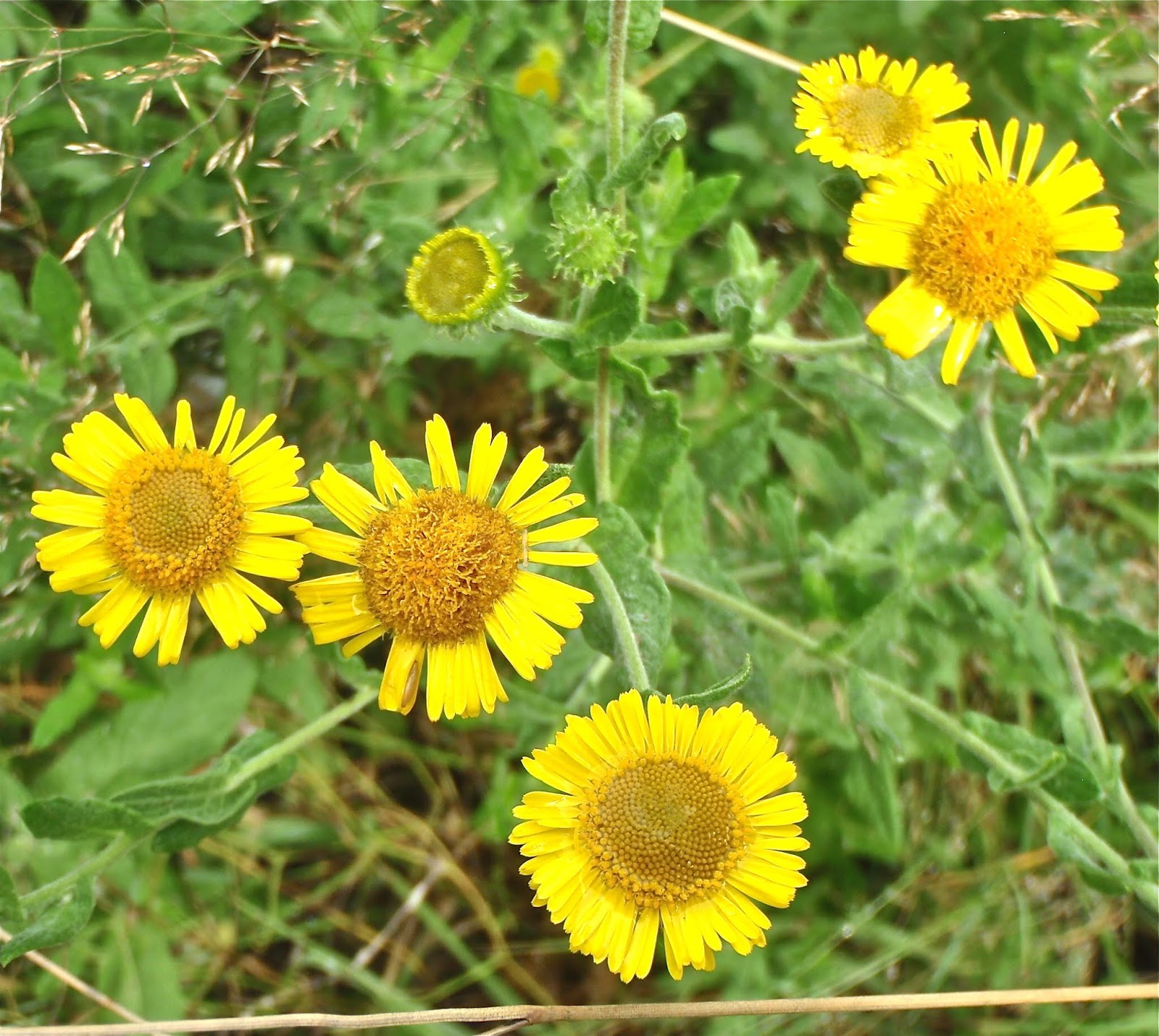
some attracted to Fleabane:


 Fleabane was doing well in the field despite continuous rain the previous day

Butterflies present:
Purple Hairstreak, Speckled Wood, Gatekeeper, Meadow Brown, Green-veined White, Large White, Small White.
Dragonflies:
Southern Hawker, Banded Demoiselle damselfly.
Innumerable Grass moths.

A full list of wildlife seen here during July 2018 follows in the next post (August 17th) as this day was definitely not representative of the 'heatwave' July.


Monday, 30 July 2018

Hoping for Rain in July

As July progressed, with each day seemingly hotter and drier, the fine grasses wilted and dried out where there was no shade, whilst other plants came into bud then flower, with berries developing all within a few days. The berries however remained small, needing water. Butterflies continued to appear in large numbers, with Gatekeepers seen even on the hottest days. Speckled Wood butterflies were also numerous, most choosing the dense shade thrown by the old Oaks and Maples on the river bank:


 A Speckled Wood butterfly hanging onto a nettle leaf - with wings closed to
prevent over-heating in the strong sun,
they usually prefer chasing in spirals high up into the shady tree canopy to basking in the sun at any time and even remained very active on the hottest days.
The rivers continued to flow well but water levels dwindled, although the steep shady river banks were damp, attracting birds seeking out invertebrates lodged in them.


Riverbank vegetation mirrored in the clear water with Salix growing across.
22nd July 2018

Willows with roots at the water's edge have grown well this year and are 
frequented by warblers, especially Phylloscopus (chiffchaff, willow warbler).
They forage for insects amongst the leaves but also thrive on insects over the water,
'flycatching'

Another butterfly,  the Comma (polygon c-album) , mingles with Speckled Woods and Gatekeepers over bank vegetation and its caterpillars feed on the edges of nettle leaves. Only usually seen in small numbers, there were always one or two present n the same locations as the other two species but often seen basking with wings outstretched. When perching with closed wings however it can be almost invisible.


 This Comma butterfly is perching with outstretched wings in order to catch the faint sunshine on a rare cloudy day. 
Unfortunately, promising thunderclouds yielded no rain here, but did cause the river level to rise slightly as rain fell in the catchment area upstream. 
13th July 2018


Sunday, 8 July 2018

A Memorable Week in July - Gatekeepers!

The first week in July 2018 has been especially memorable here,  with large numbers of butterflies patrolling the grasses, brambles and nettles along the warm river banks, in the sun and dappled shade. During the first four or five days of July, Meadow Browns, Ringlets, Speckled Woods, Large and Small Skippers, Green-veined Whites, Large and Small Whites, Commas and Red Admiral were seen foraging and chasing amongst the rapidly drying grasses, flowering Brambles and Dog-roses.
On the 6th July however there were suddenly many more, hundreds of Gatekeepers had emerged and were restlessly flying from plant to plant, very few pausing to bask on leaves or flowers - perhaps it was too hot. They are late to emerge this year, after the cold winter.


A small bright male Gatekeeper perches for a second on a Bramble leaf before flying off to chase another amongst the mass of leaves and flowers, in sunlight and cool shade, then across onto the embankment grasses where hundreds more were active.


Another Gatekeeper amongst the grasses, now outnumbering the Meadow Brown butterflies.

They are quite easy to distinguish from any other butterfly. The other most common species present was the Meadow Brown - but this is larger and not as bright, with a dull orange patch around the single white pupil in a black eyespot and the wings dull brown and grey-brown. The Gatekeeper's eye spot has two white pupils in a black ring.   
Skippers have bright light orange and brown wings but lack eye spots and usually bask with wings half-closed.

Birds were still very active here all week too, with common whitethroats,singing wrens, blackbirds, song thrush, chiffchaff, blackcaps, garden warbler, dunnock , house sparrows, calling great-spotted woodpecker, nuthatches, great tits, blue tits, all with 'yellow' juveniles in tow and a grey wagtail flying over the water. A grey heron dropped a common frog whilst being chased by a herring gull.
Banded Demoiselle damselflies, both male and female were seen perching in the early sun on the river bank vegetation, waiting to pounce on small insects above the water and Southern Hawker dragonflies were seen ranging along the banks.

Saturday, 30 June 2018

A Butterfly June

Friday 22nd June 2018 began, as usual, in bright sunshine, with a cool northerly breeze, becoming hot later.  The ground remained green and damp in shady places, with Bramble still very much in flower along the banks, attracting numerous bees and other insects whilst the long grasses were thronged with butterflies - mostly Meadow Browns in the hot sunny areas and good numbers of Ringlets in dappled shade. Speckled Woods also frequent dappled shade but usually range along woodland and tall thickets. Several Green-veined Whites were present too with unusually high number of Large Skippers in their favoured habitat, long dry grasses. If perched, they look just like orange-brown dead leaves which suddenly spring to life. 
Banded and Beautiful Demoiselle Damselflies are still present along the river, chasing under the steep banks and perching on nettle and Bramble leaves, in wait for insect prey. Along the banks several bright Comma butterflies were ranging, fast flying and inquisitive. Loose clusters of Stitchwort were growing well  amongst the tall grasses and flowering Common Mouse-ear was seen on the shadier banks:


Common Mouse-ear on green banks

With such a slight breeze it was very quiet indeed on the riverside - apart from birdsong. All kinds of 'rustling' occurring in the trees and tickets was significant today as there was no wind.
A large clump of Rosa canina was flowering abundantly, facing the sun on the river bank, covered in bees and flies:


Dog Rose - Rosa canina in the sun, overpowering the Brambles

This was Sparrow Weather - house sparrows (65) could be heard in colonies all along the river course - they love the hot weather but also seek out water where they can drink and bathe. The river provides plenty of safe places here. No silent summer yet - singing blackbirds (25) could be heard, near and far,  their voices echoing, whilst others were 'sunning' on verges, wings and tails spread out in
the sun. Fledged juveniles were foraging nearby and other adults were nesting with second broods.
Song thrushes continue to sing loudly (5) and were seen under green damp hedges and undergrowth, foraging.
Also very audible were wrens (26) most singing again whilst others watched over newly fledged young. There was a fine view of four fledged juveniles keeping close together, learning to forage on branches over the river, lining up together on a small twig just above an adult  grey heron foraging on 
the river, which flew off, it's fishing disturbed by the juvenile wrens. Much further away downstream a juvenile grey heron was fishing under the steep banks (total 2).
There were now many blue tit  (58) juveniles forming groups in the thickets, easily visible with their yellow plumage mixing in some places with juvenile house sparrows. Great tits (18) seemed to be keeping in family groups,  'yellow' juveniles and adults foraging together. Noticeably absent at first were robins whose song is often the first to be heard - but not today. Only 9 were seen, with 5 singing.
Their 'absence' doesn't mean they have flown away but are probably in hiding, perhaps raising more broods whilst some may already be moulting.Three dunnocks were seen and heard in the undergrowth. Like the robins, few goldfinches were seen and heard (6) and only one greenfinch.
21 wood pigeons were seen, some calling and 5 magpies just sitting in trees, chatting. A small total of 4 carrion crows, sat inactive in the heat of the day - and a single herring gull was sailing high.
With the longest day only yesterday and continuing fine weather most birds do not have to frantically seek food all their waking hours and can rest, hidden from view for a while.
Nuthatches (11) however have now become noisy again, with fledged young calling loudly, still keeping to their nesting territories.  A distant green woodpecker nest still held young, making the loudest calls! whilst one adult was seen flying across. It's been a very good summer so far for ants - food of the green woodpecker having a wide choice of ants nests to forage from. A great spotted woodpecker flew across to its tree but no young have been seen yet.

Lastly, our summer migrants are still active here, with four whitethroats still nesting, chiffchaffs still very vocal (6), a single singing garden warbler and ten blackcaps, most of these singing too.

Finally a mallard family enjoying the calm slow waters of the river, perfect for rearing young - the adults only were seen today but later were seen with at least 8 duckings in tow.
Just above, a common buzzard was seen being chased by a carrion crow.